Discover how Colombia’s second-largest city is revolutionizing public safety with real-time visual intelligence
When someone calls 123 in Medellín with an emergency, something remarkable happens. Within seconds, emergency operators can see exactly what the caller sees, know their precise location, and guide first responders with real-time visual intelligence—all without downloading an app.
This is the new reality of emergency response in Medellín, and INOVISEC is proud to have been instrumental in making it happen.
A City Transformed
Medellín now stands alongside New York, Tel Aviv, and Copenhagen as a global leader in emergency management technology. The Metropolitan Integrated Emergency and Security System (SIES-M) has fundamentally transformed how the city responds to emergencies.
The impact in numbers:
- 8,000+ emergencies handled using live video per day
- 11 emergency agencies coordinated through a single platform
- First city in South America with comprehensive live video emergency response
The Technology That Makes It Possible
Instant Visual Connection
The system’s cornerstone is elegantly simple: when you call 123, operators can instantly see through your smartphone camera.
How it works:
- Citizen calls 123 during an emergency
- Operator sends a secure link via SMS or WhatsApp
- Caller clicks the link—no app download needed
- Live video streams directly to the operator
This means operators can visually assess medical situations, identify landmarks for missing persons, and evaluate security threats in real-time.
Precision Geolocation
The system automatically captures GPS coordinates, eliminating confusion about addresses and enabling faster response times. Dynamic tracking works even for moving situations, ensuring help reaches the exact location needed.
Silent Communication
Through secure text chat and photo transmission, individuals in dangerous situations can request help without speaking. The system leaves no traces on devices after calls end, providing crucial safety for domestic violence victims and those facing security threats.
Real Impact, Real Lives
Medical Emergencies: Operators guide family members through CPR step-by-step via live video, watching to ensure correct technique until ambulances arrive.
Missing Persons: Real-time geolocation and video help locate lost children and elderly individuals with cognitive impairment, dramatically reducing search times.
Complex Emergencies: Fire departments and rescue teams receive visual intelligence before arriving at landslides or building collapses, enabling them to bring the right equipment and plan effectively.
Integration at Scale
What makes Medellín’s system revolutionary is comprehensive integration across multiple agencies:
Coordinated Response: Metropolitan Police, Fire Department, Emergency Medical Services, Disaster Management, Mobility Secretariat, Prosecutor’s Office, National Army, and Social Services all operate through the unified platform.
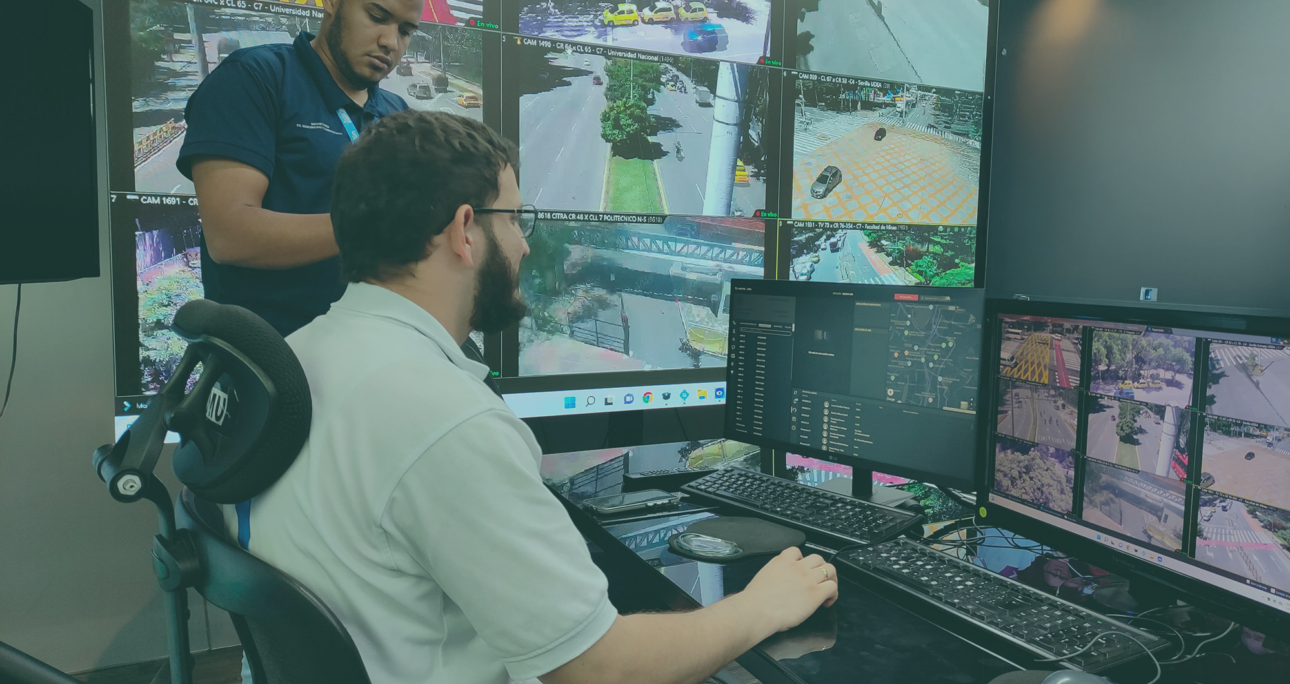
Connected Infrastructure: Computer-Aided Dispatch, 4,800+ CCTV cameras, vehicle tracking for all emergency units, 1,373 police body cameras, and an emergency helicopter with thermal imaging all feed into the system.
This integration eliminates traditional silos, ensuring the right resources reach emergencies quickly.
Privacy and Security Built-In
Operator Control: Emergency operators maintain full control over video access. When calls end, all access automatically terminates.
Secure Storage: Video recordings are encrypted and stored for 90 days with restricted access, maintaining chain of custody while protecting privacy.
No Device Traces: The system leaves no data on caller smartphones after calls end.
Full Auditing: All operator access is authenticated and audited, ensuring accountability.
A Regional Milestone
Medellín’s system serves not just the city but the entire Valle de Aburrá metropolitan region, making it the first comprehensive implementation in South America. This leadership position has made Medellín a reference model for cities across Latin America seeking to modernize emergency response.
Beyond Emergencies: A Safer City
The transformation extends throughout urban life:
- Crime prevention through integrated camera networks
- Traffic management via real-time incident detection
- Disaster preparedness infrastructure
- Enhanced citizen confidence and quality of life
Looking Forward
The platform continues evolving with:
- IoT sensor integration for smart city capabilities
- AI-assisted incident analysis
- Enhanced data analytics for pattern recognition
- Predictive resource deployment
Lessons for Other Cities
Medellín’s success demonstrates that:
- Integration beats addition – Connect existing systems rather than adding disconnected ones
- User experience matters – No app downloads removes critical friction
- Privacy must be foundational – Build it in from the start
- Training equals technology – Empower operators to leverage capabilities effectively
- Start comprehensive – Avoid fragmentation from piecemeal approaches
The INOVISEC Difference
INOVISEC didn’t just deliver technology—we partnered with Medellín to transform emergency response culture, integrate disparate systems, train personnel, and create a sustainable platform for continuous improvement.
This project showcases what’s possible when cutting-edge technology meets deep emergency response expertise.
A Model for the Future
Medellín’s journey from security challenges to global emergency response leadership proves transformation is possible. With proper technology, integration, training, and commitment to improvement, cities can fundamentally change how they protect citizens.
As urban populations grow and emergency challenges increase, Medellín’s model offers a proven path forward—one where technology empowers responders to save more lives and serve more effectively.
The future of emergency response is here. It’s happening in Medellín. And INOVISEC is proud to be part of it.
Interested in learning how similar solutions can transform public safety in your city? Contact INOVISEC to explore how our 911 Regional PSAP expertise can help your community achieve world-class emergency response capabilities.