
Every second counts when it comes to urban emergencies. An ambulance stuck in traffic, firefighters unable to reach a scene in time, or an accident that brings an entire city to a standstill—these scenarios are far too common in our modern metropolises. However, artificial intelligence is radically transforming how cities respond to these mobility crises.
The Problem: Congested Cities, Lives at Risk
The statistics are alarming. In cities with heavy traffic congestion, emergency response times can increase by up to 40% during rush hours. This doesn’t just affect operational efficiency—it can literally mean the difference between life and death.
The main challenges facing modern cities are diverse and complex. Unpredictable congestion constantly shifts due to multiple factors, while poor coordination between emergency services and traffic systems creates critical delays. Fragmented information across multiple systems that don’t communicate with each other compounds the problem, and traditional systems only react after an incident has already occurred.
How AI Is Revolutionizing Emergency Response
Real-Time Prediction and Prevention
AI systems analyze millions of data points simultaneously: vehicle flow, historical patterns, scheduled events, weather conditions, and social media data. This capability enables predicting congestion before it happens, identifying high-risk routes for accidents, and anticipating emergency resource needs across different areas of the city.
Dynamic Emergency Route Optimization
When every second counts, AI calculates the optimal route for emergency vehicles in milliseconds. The system considers real-time traffic on all possible routes, identifies traffic signals that can be synchronized to create “green corridors,” finds alternative routes that other navigation systems don’t know about, and evaluates current conditions on each roadway. Machine learning algorithms constantly learn from each emergency trip, improving their recommendations with every intervention.
Intelligent Traffic Signal Management
Traditional traffic signal systems operate on fixed cycles or with basic sensors. AI completely changes the paradigm through instant adaptation that detects an emergency vehicle and automatically creates green waves along its path. The system also reconfigures traffic flows, redirecting general traffic to clear critical routes, while coordinating multiple intersections that work in sync to facilitate emergency service passage.
Automatic Incident Detection
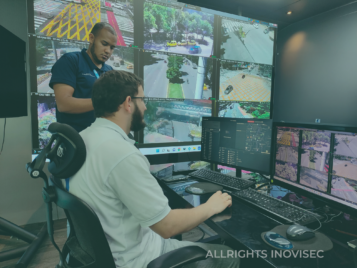
Cameras equipped with computer vision and IoT sensors automatically detect vehicle accidents, broken-down or stopped vehicles on main roads, pedestrians or cyclists in danger, and hazardous conditions like spills or objects on the roadway. Automatic detection reduces the time between incident and response from minutes to seconds, enabling much faster intervention.
Multi-Agency Coordination
AI platforms act as virtual command centers that connect police, fire departments, ambulances, and traffic management in a single integrated system. These platforms share real-time information among all agencies, optimally assign resources based on priorities and availability, and prevent duplication of efforts and confusion during emergency response.
Real-World Success Stories
Successful implementations of AI in urban emergency management are demonstrating impressive results around the world:
- Los Angeles, USA: Reduced ambulance response times by an average of 12%, translating to hundreds of lives saved annually
- Singapore: Their predictive system reduced overall congestion by 25% and improved emergency response times by 18%
- Barcelona, Spain: Their smart city project achieved a 30% reduction in incident detection time
Key Technologies in Action
The ecosystem of technologies making this revolution possible combines multiple disciplines. Machine learning and deep learning enable predictive analysis of traffic patterns, recognition of recurring emergency patterns, and continuous improvement based on historical data. Computer vision facilitates automatic incident detection through cameras, license plate reading for prioritization, and constant monitoring of road conditions.
Smart sensors and IoT devices create a real-time monitoring network spanning everything from traffic sensors to connected devices in emergency vehicles and intelligent traffic signals with two-way communication capability. All of this integrates through big data analytics platforms that process millions of data points per second, integrate multiple sources like GPS, cameras, social media, and weather forecasts, and perform historical analysis for continuous system improvement.
Measurable Benefits
Implementing AI systems for traffic emergency management generates concrete, quantifiable results:
- 15-40% reduction in response times for emergency services, making the difference in critical situations
- 20-30% decrease in mortality related to emergency medical care delays
- 25-35% improvement in operational efficiency of emergency services through better resource allocation
- Up to 20% reduction in operational costs thanks to intelligent optimization of resources and routes
- Greater citizen satisfaction and improved perception of community safety
These numbers aren’t just statistics—they represent lives saved, families protected, and safer communities.
Challenges and Considerations
Implementing these systems isn’t without significant challenges. Privacy and data handling require robust frameworks for protection and transparency about what information is collected and how it’s used. The initial investment required for infrastructure, sensors, and training is substantial, though return on investment typically justifies itself within three to five years.
Equity and accessibility represent another critical challenge, making it crucial to ensure benefits reach all neighborhoods and not just privileged areas. Finally, technological dependence means needing robust backup systems to maintain operations when primary technology fails.
The Future: Truly Smart Cities
The next generation of AI systems for emergencies promises even more advanced capabilities. Generative AI will enable simulating complex scenarios and training response teams in realistic virtual situations. Digital twins of entire cities will facilitate strategic planning and simulation of interventions before implementing them.
Autonomous emergency vehicles that coordinate seamlessly with infrastructure will begin appearing on streets, while integration with drones will provide rapid situation assessment and delivery of medical or emergency supplies. Vehicle-to-everything communication systems will enable perfect coordination among all elements of the urban ecosystem.
Artificial intelligence isn’t just another tool in urban traffic management—it’s a fundamental shift in how cities protect their citizens. By reducing response times, optimizing resources, and preventing emergencies before they become crises, AI is saving lives every day.
For cities that haven’t yet adopted these technologies, the question is no longer “should we?” but “when do we start?”. Every day of delay means missed opportunities to better serve our communities and, potentially, lives that could be saved.
AI-powered smart mobility isn’t the future—it’s the present. And for urban emergencies, the present has never looked more promising.
Is your city ready for the AI revolution in emergency management? The time to act is now.